

|
|
|
|











 |
|
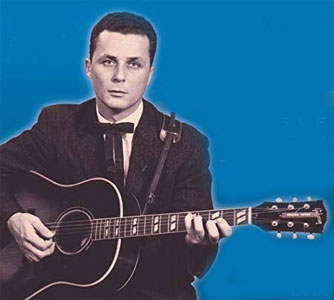
 Chanteur
Country US né le 13 Juin 1931 à Clearfield (Pennsylvanie). Howard Vokes est mort
le 3 Juin 2018.
Chanteur
Country US né le 13 Juin 1931 à Clearfield (Pennsylvanie). Howard Vokes est mort
le 3 Juin 2018.
 Cowboy Howard Vokes, Pennsylvania's King of Country Music,
was born, June 13,1931 in Clearfield, Pennsylvania. He got interested in country
music at an early age; his Mom and Dad always seemed to have either the Grand
Ole Opry or the Supper Time Frolics on during the evening. The sounds that
caught young Howard's ear got his attention and by the time he was six years of
age, he was playing the haromonica. Later on, he learned to play the guitar when
he was eleven years old. He remembers that first guitar he got was when he
walked to a hock shop with his dad and got it for five dollars.
Cowboy Howard Vokes, Pennsylvania's King of Country Music,
was born, June 13,1931 in Clearfield, Pennsylvania. He got interested in country
music at an early age; his Mom and Dad always seemed to have either the Grand
Ole Opry or the Supper Time Frolics on during the evening. The sounds that
caught young Howard's ear got his attention and by the time he was six years of
age, he was playing the haromonica. Later on, he learned to play the guitar when
he was eleven years old. He remembers that first guitar he got was when he
walked to a hock shop with his dad and got it for five dollars.
His dad was Benjamin George Vokes, was a coal miner. His mom was Agnes Rose. The
Vokes family was quite large, 13 siblings in all, six girls and seven boys. One
sister Betty Ann was killed in an auto wreck April 24, 1967; the event was one
of the family's saddest moments.
At 15 years of age Howard started singing at a lot of parties and working with
different bands in places he wouldn't think about working in these times. Some
of the spots were plenty tough and living and working around mining towns like
Renton and Barking, Pennsylvania you can about guess the rest. While he was
listening to those Saturday night Opry shows, he was attracted to the sound of
Roy Acuff's singing and
listened to the records of
Gene Autry and
Jimmie Rodgers.
The guitar and Howard were constant companions and he sang over Radio WKPA in
New Kensington and WAVL Apollo, both in and several other stations in
Pennsylvania. His sister Barbara used to help him sing and together they sounded
really good; however she didn't have the same interest in the music business
that Howard did.
In those days Howard was barn-storming all over the place, singing and playing
for anyone that would listen as many hillbilly singers were doing to make a go
of it. He was a great favorite at most local parties and other events. He was on
the verge of forming a band when tragedy struck.
A hunting accident put Howard in the hospital for 6 weeks. He was shot in the
right ankle by a high-powered rifle and the slug dust about tore his foot off.
He feared that he might lose the foot and doctors warned that even if they
didn't have to amputate the foot, he probably wouldn't walk the same again.
Howard did a lot of praying and had to endure about 300 shots to save his foot.
But perhaps such an event turns out to be a blessing in disguise. It was while
in the recovery period that Howard wrote many songs and perfected his guitar
work. He still lives with the effects of this accident and walks with a slight
limp, but feels it worked out okay in the end and his faith was strengthened.
After he recovered, Cowboy Howard Vokes dug into his song-writings and formed
his now famous "Country Boys" band. He went to work at PPG Industries in
Creighton, Pennsylvania.
At that time Howard and his band was about the hottest act in the area having
more engagements than they could handle. While he was moving swiftly up the
ladder of success in the business, Howard was also turning a helping hand to
other artists, perhaps the roots of his eventually becoming a promoter.
First in line was Hank King who was also from New Kensington, Pennsylvania. At
the time Hank was looking to get a record out but Howard's efforts help Hank get
a recording made. Hank recorded two of Howard's compositions, "Atom Bomb Heart"
b/w "I Want To Know Why You Don' Care For Me". They went on the road together
and did rather well. But Hank had to give up the business.
In what turns out to be a bit of a milestone as a promoter, Howard took over the
management of Denver Duke & Jefferey Null. The boys at that time lived in
Cicero, Illinois recorded Howard's tribute song about the late and great
Hank Williams, titled, "Hank
Williams That Alabama Boy" and one of their own songs titled, "When We Meet Up
Yonder" for the Blue Hen Record Company out of Harrington, Delaware. That record
took off and both songs showed up in several record charts, and finally the boys
got so hot, Howard was able to start getting them personal appearances in wider
area covering several states.
The boys appeared on the Grand Ole Opry, the WLAC Jamboree, at the
Ernest Tubb Record Shop, the
WWVA Original Jamboree, and other important shows on radio and TV. They were
doing quite well and caught the eye of the folks at the Mercury record label.
Soon after, Howard Vokes had the team of Duke & Null recording for Mercury.
Their first release may have been another tribute song, "Hank Williams Isn't
Dead" and then it was back on the road.
Howard is a stickler and firm believer in traditional country music and that is
why the older artists such as Clyde Moody,
Jimmie Skinner, Lee Moore,
Doc Williams,
Hylo Brown, Urel Albert, Rudy
Thacker,
Patsy Montana, Kenny Roberts,
and many, many others have Howard to thank for booking them so often in his
state, or else just putting in a good word to other bookers where they may be
hired and appreciated.
As Howard tells us, "The traditional artists continue to be neglected and really
these are the real professionals that know the meaning of real country music.
They know what it is to play in the worst of places in coming up, many times
working for a few dollars and often for nothing. They did it for the love of it.
The modern stars of today, many of them had it easy on the way up, smart
managers and the like, several overnight successes and the majority not doing
country music."
Howard continued, "Just give me the traditional artists anytime and believe you
me I'm one that will continue to book them, plug and promote them, and help in
anyway I possibly can. They deserve it and if these older down-to-earth country
artists received the attention today that the modern acts are getting, they'd be
making big money, selling a lot of records, and getting the kind of attention
that they so rightfully deserve."
"We need the radio stations for real help in that regard, and it's good to note
that some stations are giving the Real country artists their due again." Howard
goes on, "I read back where a small radio station went full time hard-country
with amazing results. That should tell everybody something. When stations go All
Country and then won't play
Roy Acuff',
Ernest Tubb,
Kitty Wells or
Bill Monroe, well to me this is
just plain nonsense."
Howard notes further, "The older artists paved the way for what country music is
today, and it makes my heart feel very happy that we're getting back to the
fiddle and steel-guitar "kick-offs" and "turn a-rounds" on the country records
once again. Good sign that the pollution in country music is slowly fading into
the sunset. I've always fought for the preservation of my kind of music and
spent a Lot of money in that regard. With what radio, TV and records have been
passing off as country music, maybe that's why the real country & bluegrass
festivals have become so popular and drawing such huge audiences. Just goes to
show that people have to go into the woods to hear their beloved type of music."
Howard states, "Let's have the "modern trend" however we as the record buyers
and lovers of traditional music should never let down the fight to have and keep
radio stations giving time to our kind of music promoting it and taking a clear
stand whenever and wherever the tohe opportunity presents itself. Artists should
record a country record making sure it sounds like one; producers should produce
a record so it sounds country, and the record people, promoters, publishers
should push it heavily via radio, TV, the distributors, juke box operators, etc.
We're winning the battle. Can't be two sides of the fence. Has to be one or the
other."
After reading what Howard has to say, we know he speaks his mind and like it is.
As for Howard and his music, people say when Howard sings he singe with so much
feeling at times that tears often start rolling down his cheeks.
Let's get on to learn how Howard first started to record. Howard had booked the
boys, Denver Duke and Jefferey Null in Cleveland, Ohio at the old Circle
Theatre. The show's emcee, Tex Clark decided that Howard should sing a couple of
songs, too.
When Howard's turn at the microphone came, he sang his rendition of the old
Doc Williams song, "Willie Roy,
the Crippled Boy" and literally tore the house down! Tex Clark kept calling
Howard back for encore after encore.
After that folks kept pestering Howard that he should do some recording. He
finally listened to them and took his Country Boy band and went into a
Cleveland, Ohio studio. Howard's first record, "This Prison I'm In" b/w "Ghost
Of A Honky Tonk Slave", got good reviews, but it didn't do much. But it wasn't
all for nothing, Tex Williams covered the song and Howard was the publisher of
the song.
Later on, Howard released his version of his very favorites "Willie Roy, The
Crippled Boy" on DEL-RAY Records, a division of Blue Hen Records. They mailed
the single out to numerous radio stations. Howard also made a trip to Nashville,
Tennessee and appeared on a number of shows. When he finally got back to his
home in New Kensington, he walked into a mountain of mail, phone messages and
telegrams.
It was very clear that "Willie Roy" had caught on and was getting on the radio
charts around the country. It wasn't too long after that Howard Vokes and his
Country Boys were on the road, travelling to at least 20 states for personal
appearances. When we tell you the record was "hot" for Howard and did well, it
was. He recorded the three different versions of the song and it's been issued
in several foreign countries, too.
He released other records, one, "Mountain Guitar" was also covered by one of his
early influences -
Roy Acuff'. Howard was so HOT
on records at that time that Don Pierce called him to Nashville to do an LP for
STARDAY Records. He recorded a winner in "Tragedy Aand Disaster In Country
Songs" and a single was released, "The Miner".
Howard has written over 500 songs with more than half on commercial records.
Major stars such as
Wanda Jackson, Lonzo & Oscar,
Skeeter Davis,
Tex Williams, and others have
recorded his tunes. Howard owns Vokes Music Publishing Company (BMI) and be has
several top writers with his firm, including Louise Webb, Rudy Thacker and
Billy Wallace, writer of many
hits including the country classic, "Back Street Affair".
Wanda Jackson had a hit in the
early 1960s with Howard's "Tears At The Grand Ole Opry."
For years Howard has operated various Jamborees in his area and booked as much
traditional talent as he possibly could. His Friday night jamboree at the Edna
Hotel in Arnold, Pennsylvania was successful during its run. The Sunday Jamboree
at the Logans Ferry Heights Fire Hall in Plum, Pennsylvania entertained fans
many times, too. Perhaps the most widely known of the shows he put on is the
Saturday night Jamboree Howard held at the Griltz Hotel in Verona, Pennsylvania
lasting some 16 years. During the run of the Saturday Night Jamboree, the
artists Howard had on his show read like a Who's Who in country music. Turn away
crowds were common occurences. Great traditional acts such as Clyde Moody,
Jimmie Skinner,
Hylo Brown,
Patsy Montana, Lee Moore, Kenny
Roberts, Urel Albert, Margie Lane & Sundown Pete, Jim McCoy, Rudy Thacker, and
many others wore booked time and again because of their popularity and drawing
power. Howard has several scrapbooks now filled with publicity articles, photos
and other important data in regards to all the shows and activities presented at
the former Griltz Hotel, and to him it's treasures untold.
Howard also operated Ravine Park, near Blairsville, Pennsylvania., and Frazer
Township #2 Fireman's Farm in Tarentum, Pennsylvania.
Howard's many successes include manager of several country artists, a booking
agency, song-writer, music publisher, record owner, promoter, singer., and
really anything else that might pertain to in country music circles.
Howard has been married three times but not at the present time. He has, though,
8 wonderful children, Howard Jr., Benjamin, Martha, Victoria, Gladys, Agnes,
Sharon and Francis. Most of them are taking interest in or playing the guitar.
Howard is hoping that one in the lot who loves his music will be destined to
carry on the Vokes music heritage.
Finally, if you're not convinced yet of Howard's devotion to traditional country
music, we'll leave you with a quote from an article by Hugh T. Wilson called
"Howard Vokes, "Pennsylvania's King of Country".
Howard Vokes died on June 3, 2018.
http://www.hillbilly-music.com/artists/story/index.php?id=12683
Talents : Vocals, Guitar
Style musical : Traditional Country
Ghost Of A Honky
Tonk Slave (1958)

Willie Roy, The Crippled
Boy (1959)
IT'S ALL RIGHT NOW (1961)
DEATH
ON THE HIGHWAY
(1963)
THE
YELLOW TOMB (1964)
|
|
Years in activity :
| 1910 | 20 | 30 | 40 | 50 | 60 | 70 | 80 | 90 | 2000 | 10 | 20 |
DISCOGRAPHY
Single & EP
| 1958 | SP Del-Ray DR-204 (US) | . |
Cowboy Howard
Vokes & His
Country Boys -
Ghost Of A Honky
Tonk Slave
|
| 1959 | SP Del-Ray DR-205 (US) | . |
Cowboy Howard
Vokes & His
Country Boys -
Willie Roy, The Crippled Boy
|
| 1961 | SP Del-Ray DR-207 (US) | . |
Ed Tex Berlin - Live And Let Live / I’m Falling In Love Again [vcl Howard Vokes] |
| 11/1961 | SP Del-Ray DR-209 (US) | . |
It's All
Right Now
|
| 07/1961 | EP Del-Ray EP-250 (US) | . |
Cowboy Howard
Vokes & His
Country Boys - Forever / Willie Roy, The Crippled Boy
|
| 1962 | SP Del-Ray DR-211 (US) | . |
Cowboy Howard
Vokes & His
Country Boys - Love I
Once Knew /
Willie Roy, The Crippled Boy
|
| 1962 | SP ACADIA AC 1002 (CAN) | . |
Cowboy Howard Vokes & His
Country Boys - Willy Roy
(The Crippled Boy)
/ If This
World Wants Peace |
| 1962 | SP ACADIA AC 1005 (CAN) | . |
Ghost Of A Honky
Tonk Slave
|
| 06/1962 | EP STARLITE ST.EP.27 (UK) |
 |
Howard Vokes
& His Country Boys -
Forever /
Willie Roy, The Crippled Boy
|
| 1963 | EP STARLITE ST.EP.37 (UK) |
 |
Howard
Vokes & His Country Boys
- Mountain Guitar / The Prison I'm In /
Ghost Of A Honky
Tonk Slave
/
It's All
Right Now
|
| 10/1963 | SP STARDAY 648 (US) | . |
Death
On The Highway
/ The
Miner |
| 1964 | SP Del-Ray DR-215 (US) | . |
Rose & Dixie with Howard Vokes & His Country Boys - The Love I Once Knew Will Never Return / Ain't It Hard To Love |
| 09/1966 | SP VOKES VOKES-103 (US) | . |
Old Shep / His Last Ride |
| 05/1969 | SP WASP WR-119 (US) | . |
A Plastic Heart / Empty Victory |
| 1970 | SP VOKES VOKES-111 (US) | . |
Born Without A Name / It Takes Six Men To Carry A Man To His Grave (But Only One Woman To Put Him There) |
| 1972 | SP VOKES VOKES-112 (US) | . |
West Of The Yukon / Break The News (But Break It Gently) |
|
|
|
|
|
|
|
|
Albums
| 10/1962 | LP 12" MOUNTAIN LP-2002 (US) |
 |
Mountain Guitar And Other Favorites - Mountain Guitar / Tears At The Grand Ole Opry / Forever / Down In The Hollow / This Prison I'm In / Willy Roy (The Crippled Boy) / The Polka From Outer Space / If This World Wants Peace / It's All Right Now / Keep Cool But Don't Freeze |
| 1964 | LP 12" STARDAY SLP-258 (US) |
 |
TRAGEDY & DISASTER IN COUNTRY SONGS BY HOWARD VOKES - Put My Little Shoes Away / The Sinking Of The Titanic / The Death Of Little Kathy Fiscus / His Last Ride / Cyclone At Rycove / Willie Roy / The Tragedy Of Chicago / The Miner / Don't Make Me Go To Be And I'll Be Good / Death On The Highway / The Engineer's Last Ride / The Yellow Tomb / Mommy Please Stay Home With Me / Old Shep |
| 196? | LP 12" Stone SX 2709 (CAN) |
 |
The Amicable Mr. Vokes - Mountain Guitar / Tears At The Grand Ole Opry / Forever / Down In The Hollow / This Prison I’m In / Willie Roy (The Crippled Boy) / Ghost Of A Honky Tonk Slave / If This World Wants Peace / It’s All Right / The Love I Once Knew |
| 05/1973 | LP 12" Hadley HLP 1212 (AUS) |
 |
A COUNTRY BOY SINGS Songs Of Life - A Plastic Heart / Empty Victory / Your Kisses And Lies / Keep Cool But Don't Freeze / West Of The Yukon / Break The News / It Takes Six Men To Carry A Man To His Grave / Judge Of Hearts / My Weeping Heart / Born Without A Name / I Was A Fool; Tomorrow Is My Last Day |
| 03/1977 | LP 12" Folk Variety FV-12012 (GER) |
 |
Howard Vokes Sings Songs Of Broken Love Affair - A Plastic Heart / Empty Victory / Your Kisses And Lies / Keep Cool But Don't Freeze / West Of The Yukon / Break The News / It Takes Six Men To Carry A Man To His Grave / Judge Of Hearts / My Weeping Heart / Born Without A Name / I Was A Fool; Tomorrow Is My Last Day |
| 1979 | LP 12" FOLK VARIETY FV-12019 (GER) |
 |
TEARS AT THE GRAND OLE OPRY - This Prison I'm In / Ghost Of A Honky Tonk Slave / The Love I Once Knew / If This World Wants Peace / Forever / Willie Roy, The Crippled Boy / Mountain Guitar / Tears At The Grand Ole Opry / Polka From Other Space / Down In The Hollow / It's All Right Now / Keep Cool But Don't Freeze |
| 19?? | LP 12" BINGO 104 (US) |
 |
TRADITIONAL COUNTRY MUSIC FROM THE U.S.A. |
| 1998 | CD Condor HCD-4444 (CAN) |
|
Heartbreak And Sorrow - Willie The Crippled Boy / Plastic Heart / Tomorrow Is My Last Day / Keep Cool But Don't Freeze / Empty Victory / Break The News / West Of The Yukon / It Takes Six Men To Carry A Man To His Grave (But Only One Woman To Put Him There) / Judge Of Hearts / My Weeping Heart / Born Without A Name / I Was A Fool / Forever / Your Kisses And Lies |
| 11/2000 | CD STARDAY 5122 (US) |
 |
SONGS OF TRAGEDY AND DISASTER - COMPLETE STARDAY ANTHOLOGY - Don't Make Me Go To Bed And I'll Be Good / Mama Please Stay Home With Me / Put My Little Shoes Away / A Child Without A Name / Willie Roy, The Crippled Boy / Old Shep / The Death Of Little Kathy Fiscus / Miner's Fate / The Sinking Of The Titanic / Tragedy Of Chicago / Tomorrow Is My Last Day / Death On The Highway / His Last Ride / Yellow Tomb / Cyclone Of Rycove / Engineer's Last Ride |
| 2010 | CD Rosedale CD 421 (CAN) |
|
Songs Of Sadness - When They Take The Last Look At Me / It's Just About Time / I Had A Dream / If I Could Hear My Mother Pray Again / Lonely Mound Of Clay / Blue Eyes Crying In The Rain / Calling You / The Song Birds Are Singing In Heaven / When God Comes And Gathers His Jewels / Unloved And Unclaimed / Silver Haired Daddy Of Mine / End Of The World / I Just Told Mamma Goodbye |
| 201? | CD Rosedale CD 424 (CAN) |
|
Inspirational Songs From The Heart - It's Alright Now (Howard Vokes & Skeets Martin) / In His Arms I'm Not Afraid (Patti Powell) / Our Homeland (Tex an Martha Belin) / Amazing Grace (Howard Vokes Jr.) / If I Could Hear My Mother Pray Again (Howard Vokes & Skeets Martin) / The Family Bible (Patti Powell) / We Have Sunshine (Tex an Martha Belin) / If Jesus Comes Tomorrow (Howard Vokes Jr.) / Calling You (Howard Vokes & Skeets Martin) / Falling Leaves (Patti Powell) / The Hand Of The Master (Tex an Martha Belin) / I'll Fly Away (Howard Vokes Jr.) |
| 2010 | CD Rosedale CD 426 (CAN) |
|
The Road Of Broken Hearts - I Never Hear You Say "I Love You" / The Moon Is Weeping Over You / A House Without Love / Tomorrow Never Comes / No One Will Ever Know / Come And Knock / The Road Of Broken Hearts / They'll Never Never Take Her Love From Me / The Gypsy Told Me / Signed, Sealed, Then Forgotten / Crybaby Heart / The Price To Pay For Love / The Postman Just Passes Me By / Candy Kisses |
| 201? | CD Rosedale CD 435 (CAN) |
|
Howard Vokes Live - Truck Drivin' Man / Old Shep / Born To Lose / Whoa Mule / Waltz Of The Mind / One Has My Name / Mom And Dad's Waltz / Steel Guitar Rag / You Belong To My Heart / Please Release Me / There Goes My Everything / Where Did The Good Times Go / I Couldn't Believe It Was True / My Heart Skips A Beat / Wabash Cannonball |
© Rocky Productions 24/12/2019